A Forty-Ton Truck for a Loaf of Bread: Cutting AI Costs Without Cutting Quality
Dr. Oliver Gausmann · July 21, 2026 · 9 min read
Summarize with AI
Executive Summary
People keep telling me their weekly AI limit ran out by Tuesday. Ask what they were doing and the answers repeat, summarising email and making graphics. A promotion that ended on 19 July 2026 turned that habit into a line item, because Anthropic's strongest model had been open to all paid plans for up to 50 percent of weekly usage limits and access now depends on your plan [3]. Cutting AI costs comes down to matching the task to the model: within one vendor's family the spread between the strongest and the smallest model currently runs to a factor of ten per token [1], and research published in March 2026 found that in 32 percent of model pairs the cheaper-listed model produced the higher total cost, with reversals reaching 28x [2].
Why the bill just became visible
The cost was always there. Nobody felt it, because a flat allowance hid it. Anthropic describes the consumption rate carefully, saying only that Fable 5 draws down limits faster than other models, without publishing a ratio [3].
Treating this as a consumer story misses the mechanics. The same misallocation that ends one person's week on Tuesday runs across hundreds of employees in a company, and across every customer interaction in a software product. At that point it sits in cost of goods sold and grows with revenue.
10,000 support conversations averaging roughly 3,700 tokens cost about $37 on Haiku 4.5, according to Anthropic's own documentation [1].
| Line item | Haiku 4.5 | Fable 5 |
|---|---|---|
| Input per million tokens | $1 | $10 |
| Output per million tokens | $5 | $50 |
| 10,000 support conversations | about $37 [1] | about $370 (own calculation) |
| Cache hit per million tokens | $0.10 | $1 |
| Same workload via the Batch API | about $18.50 (own calculation) | about $185 (own calculation) |
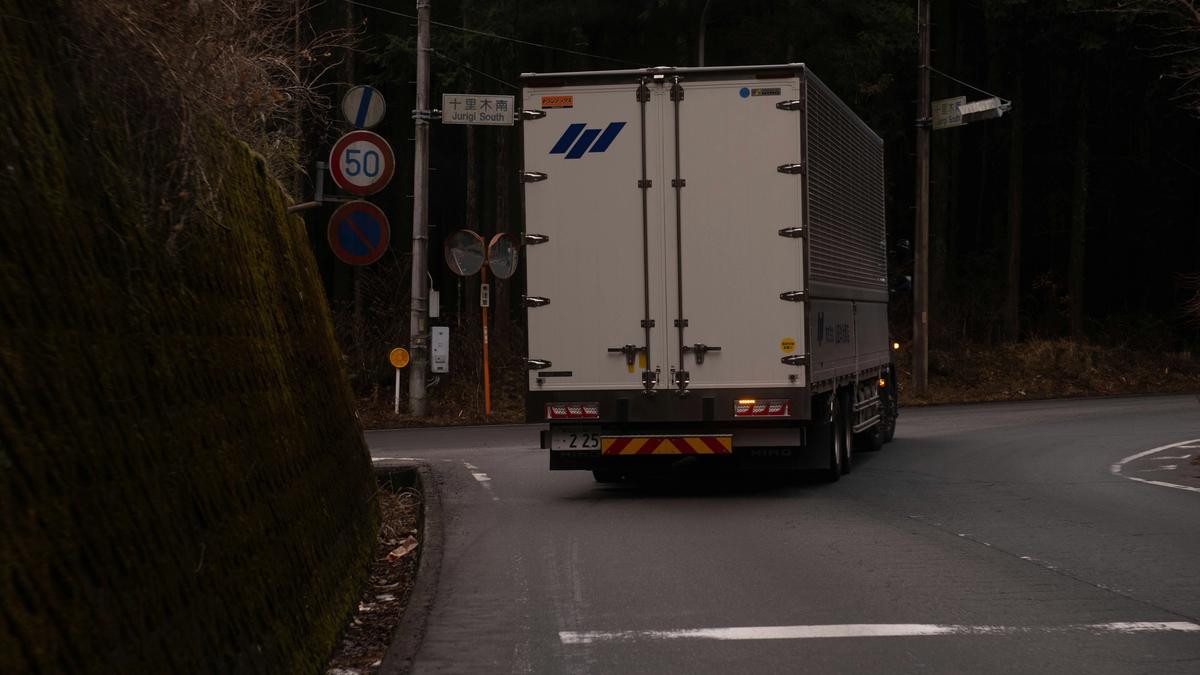
Twenty times separates Fable 5 running directly from Haiku 4.5 through the Batch API. None of those rows touches the quality of an answer to a support ticket. This is a forty-ton truck going out for a loaf of bread.
Why is model choice only the fourth cost lever?
Three levers sit in front of it, and they get far less attention.
Context volume comes first. Input tokens are billed on every single call, so a bloated system prompt or an unpruned history multiplies everything downstream. A typical 10 kB web page runs about 2,500 tokens, a 500 kB research PDF about 125,000 [1]. Carry three of those around unnecessarily and you pay for them again on every turn.
Caching is the second lever and the fastest to take effect. A cache hit costs one tenth of the normal input price at Anthropic. Writing to the cache costs 1.25x or 2x depending on how long you hold it, so it pays for itself after a single read at five minutes and after two reads at one hour [1].
Most of it hangs on how many calls a task triggers at all. This is the one finding in this research that measures orchestration and model choice in the same setup. A team at Writer measured what happens when the orchestration layer changes and the models stay fixed. Cost per task dropped from $0.21 to $0.12, a 41 percent reduction, and tokens per task fell 38 percent. Across six models the effect ranged from 33 to 61 percent. Switching from the most expensive model to the cheapest one in the same test saved 36 percent, less than the harness change delivered [4]. Quality stayed level at 0.78 against 0.81, which the authors themselves call directional at 22 tasks, while quality per dollar rose 82 percent [4].
The authors work at Writer and tested their own harness. The 36 percent figure for model switching does nothing for their product, and that is the number worth keeping.
Only then does the model question arrive, and even there the sticker price misleads. Chen and colleagues found one model priced 80 percent lower producing 38 percent higher total cost across their task set, because it burned far more thinking tokens on the same question. Two models answering an identical query differed by as much as 900 percent in consumption, and repeated runs of the same query varied by a factor of 9.7 [2].
What does a wrong answer cost?
That question carries more weight than any price list.
Frequent and harmless covers classification, extraction, summarisation, first drafts. Use the smallest model that completes the job. Most untapped savings live here.
Architecture calls, contract language and anything published under your name happen rarely and cost dearly when wrong. Arguing about token prices here wastes time. Take the best model available.
Frequent and expensive is the only quadrant where engineering effort pays back. Run two stages, a cheap model drafting and a strong one reviewing, and measure whether the review actually catches anything.
The fourth case needs no attention at all. Where something happens rarely and breaks little, thinking about it costs more than the thing itself.
The unit that matters is cost per completed task. A model that needs three attempts and 20 minutes of human cleanup costs more than one that lands first time, whatever the token ledger says. In most companies the person waiting on the output costs more than the token bill anyway.
Where price comparisons break down
Three traps hide in every comparison table, including the good ones.
Tokenisation is one. Anthropic notes in its own pricing documentation that newer models use a different tokeniser producing roughly 30 percent more tokens for the same text [1]. Price per token therefore isn't directly comparable across model generations, let alone across vendors.
Pricing deadlines are another. Claude Sonnet 5 currently runs at introductory pricing of $2 input and $10 output per million tokens. From 1 September 2026 that becomes $3 and $15 [1]. An annual budget built in July is 50 percent wrong by autumn.
And model names tell you nothing about price tier. Deprecated Opus 4.1 costs $15 and $75 per million tokens, three times what the newer Opus 5 costs at $5 and $25, and Fable 5 sits at $10 and $50, double Opus 5 [1]. Buy by the name and you buy the wrong row. And the spread already sits inside a single provider: DeepSeek charges $0.14 input and $0.28 output per million tokens for V4-Flash, against $0.435 and $0.87 for V4-Pro [13]. Run the same order of magnitude through both, at 3,700 input tokens and 300 output tokens per ticket, and you land near $6 on Flash against $19 on Pro (own calculation). A factor of three, inside one provider, without changing platform.
For a continuously maintained view of price against performance, Artificial Analysis maintains such a view [6], with llm-prices.com as a lean price-only alternative [11]. Both are snapshots. Check the retrieval date before a number enters a budget.
When is running an open model yourself worth it?
Plenty gets asserted here and little gets calculated.
Routers such as OpenRouter state they apply no markup to token prices. The fee sits elsewhere. OpenRouter charges a 5.5 percent platform fee on the pay-as-you-go plan [12]. The data question matters more than the fee. OpenRouter says it does not use inputs or outputs for training. It forwards them to whichever provider is selected, and that provider may use them for training or improvement [7]. A fixed subprocessor list therefore requires the routing to be pinned down explicitly.
Open weights deserve a distinction that rarely gets made. Under the Open Source Initiative's definition, published weights alone don't qualify; you also need the training code and meaningful information about training data [10]. By that standard almost no widely used model is open source. The line that matters operationally runs elsewhere. Apache 2.0 and MIT carry no usage restrictions or user thresholds, while several vendor community licences impose thresholds, prohibited uses and pass-through obligations. Get legal to read the licence before the first model reaches production.
On self-hosting the evidence is thin. Published break-even calculations come mostly from practitioner blogs and barely compare, because it stays open what they compare against, how utilised the hardware is assumed to be and whether staff time is counted. Anyone considering it should run the numbers on their own utilisation.
European companies face one more dimension that appears in no price table. Anthropic's data residency parameter currently accepts two values, global and US, with no EU option, and US-only inference carries a 1.1x multiplier [8]. EU processing is unavailable on the first-party API and requires the cloud platforms with European regions. That turns "which model answered, and where" into a documentation question.
How to cut your AI costs in five steps
- Measure before optimising. In Claude Code,
/usageshows session consumption broken down by model and/contextshows how the context window is allocated [5]. Without those numbers any change is guesswork. - Set model and effort at the start of a session. Every switch forces a fresh cache write, and that costs 1.25x or 2x the input price depending on how long you hold it [1]. Constant switching in the name of thrift costs money.
- Delegate bulky research to subagents. A subagent works in its own context window and returns only its finding, keeping file dumps out of the main thread [5]. For search work you can assign it a smaller model by configuration.
- Keep persistent context short. The documentation targets under 200 lines per project instruction file, because that file loads at every session start and its tokens are charged even when you work on something unrelated [5]. Anything needed only occasionally belongs in a loadable module.
- Push anything non-urgent into batch. Where a response isn't needed within seconds, the Batch API halves both input and output pricing, and that discount stacks with caching [1].
My Take
What bothers me about this debate is how firmly it fixes on price per token. That number is easy to obtain, so that is the number people discuss. Very few companies I speak to can tell me what one completed task costs, which is precisely the number that reaches the margin.
Over the next 12 months model prices will keep falling. Epoch AI put the median decline at a factor of 50 per year for equivalent capability through March 2025 [9]. AI bills will rise anyway at many companies, because consumption grows faster than price falls. Anyone without task-to-model allocation today simply scales the problem.
One more observation I think gets underrated. The people who exhaust their limit on Tuesday are usually the ones using the tools hardest. That group is your best leading indicator. If you want to know where AI costs originate in your organisation, ask the five people who hit the ceiling first.
For how the wall everyone builds differs from the moat that pays, see the moat that decides value. On the decisions that outweigh tool choice, read AI compliance architecture.
FAQ
Why is model choice only the fourth lever on AI costs?
Context volume per call, cache usage and the number of calls per task all sit ahead of it. A July 2026 measurement by Writer cut cost per task by 41 percent through orchestration changes alone, while switching models in the same test saved 36 percent.
Is the cheaper model always the cheaper choice?
No. In 32 percent of model pairs studied, the cheaper-listed model produced the higher total cost, with reversals reaching 28x. It burns more thinking tokens and needs more attempts for the same task.
How much cheaper is a small model than a frontier model?
At Anthropic the factor is ten, at DeepSeek three. At Anthropic, Haiku 4.5 costs $1 input and $5 output per million tokens, while Fable 5 costs $10 and $50, as of 21 July 2026.
Can I keep AI inference inside the EU?
Not on Anthropic's first-party API today. The data residency parameter accepts only global and US, and US-only inference carries a 1.1x multiplier. EU processing requires the cloud platforms offering European regions.